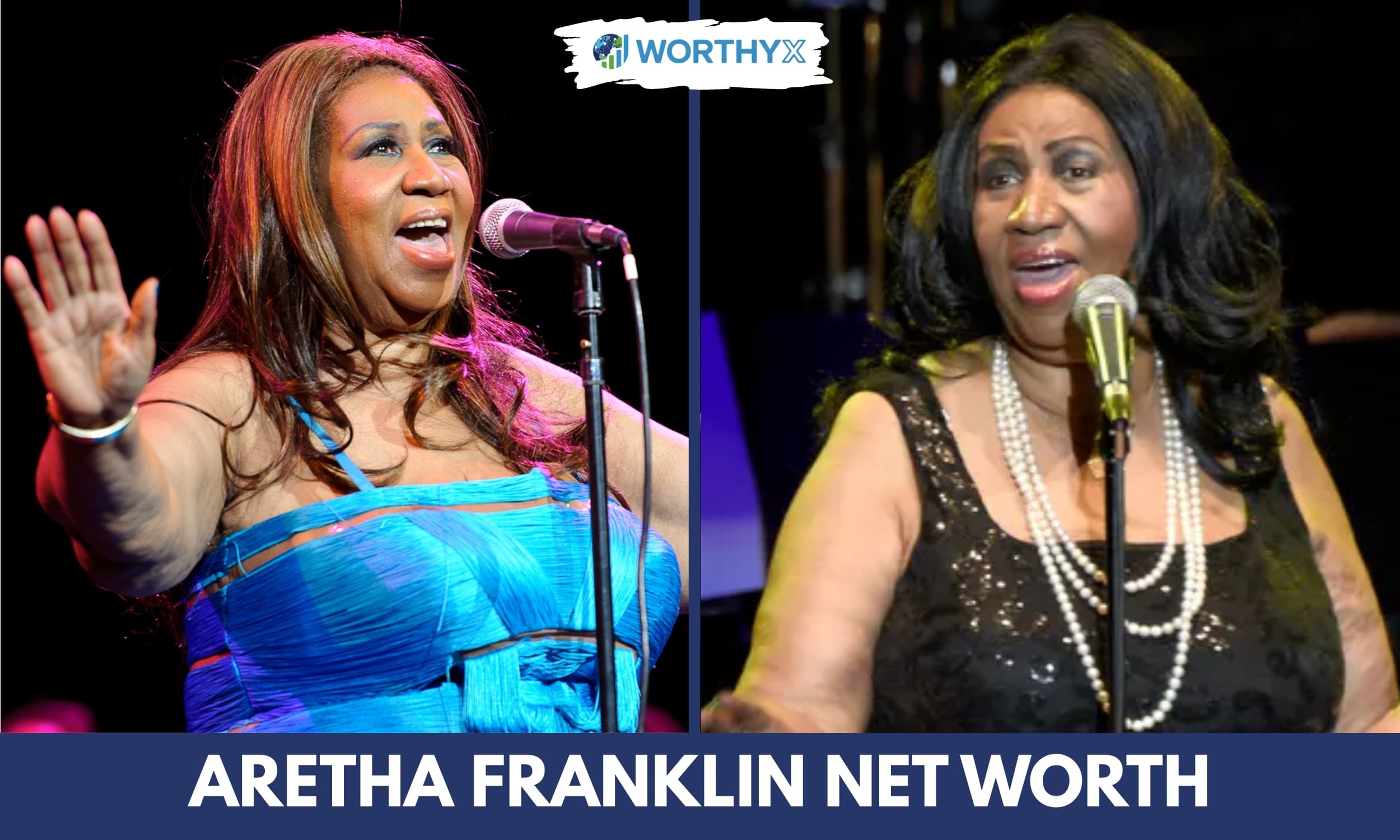
When the “Queen of Soul” passed away in August 2018, she left behind a musical legacy that defined a generation and a fortune that was estimated to be as high as $80 million.
Beneath the surface of the gold records and worldwide acclaim lay a financial tangle that would take nearly a decade to unravel.
Aretha Franklin’s death ignited one of the most publicized estate battles in celebrity history, proving that even a global icon isn’t immune to the complexities of probate law.
From a multi-million dollar IRS tax debt to the shocking discovery of a handwritten will tucked under a couch cushion, Aretha’s financial story is part drama, part cautionary tale.
As of 2026, with the legal dust finally settling and her assets finally being distributed among her heirs, we can now see the true picture of her wealth.
This article dives deep into the actual Aretha Franklin net worth, the high-stakes legal war over her “couch will,” and the vital lessons her estate leaves for us all.
Quick Bio Table
| Category | Details |
| Full Name | Aretha Louise Franklin |
| Born | March 25, 1942 (Memphis, TN) |
| Died | August 16, 2018 (Detroit, MI) |
| Cause of Death | Pancreatic Cancer |
| Primary Career | Singer, Songwriter, Pianist, Civil Rights Activist |
| Signature Hits | “Respect,” “Think,” “(You Make Me Feel Like) A Natural Woman” |
| Grammy Wins | 18 Competitive (plus Lifetime Achievement & Legend Awards) |
| Major Honors | First woman in Rock & Roll Hall of Fame (1987), Presidential Medal of Freedom |
| Spouses | Ted White (1961–1969), Glynn Turman (1978–1984) |
| Children | Clarence, Edward, Ted White Jr., Kecalf Cunningham |
| Final Net Worth | Estimated $80 Million (at time of death) |
The Portfolio: Breaking Down the Queen’s Assets
Aretha Franklin’s wealth was built on a foundation of sheer talent and a shrewd, legendary insistence on being paid her worth.
While the $80 million headline figure captured the public’s imagination, the actual makeup of her estate was a complex mix of tangible luxury and intangible intellectual property.
Music Catalog and Royalties
The engine of her estate is her massive music catalog. Aretha sold over 75 million records and charted 112 Billboard singles. Even in 2026, her music generates an estimated $3 million to $4 million annually in royalties.
Interestingly, she didn’t receive songwriter royalties for her biggest hit, “Respect” (which went to the estate of Otis Redding), but her own compositions like “Think” and “Rock Steady” continue to be significant earners.
Real Estate Holdings
At the time of her passing, Franklin owned several high-value properties in Michigan. Key assets included:
- The Bloomfield Hills Colonial: A 4,148-square-foot brick home valued at roughly $1.1 million.
- Historic Detroit Mansion: A 5,600-square-foot property near the Detroit Golf Club.
- The “Riverfront” Lifestyle: She was living in a luxury downtown Detroit apartment at the time of her death.
Tangible Luxury and “The Handbag”
Franklin was famous for her collection of luxury furs, designer gowns, and fine jewelry. Beyond the aesthetic value, these items were high-ticket auction pieces; over 30 of her iconic outfits were estimated to fetch thousands of dollars each at auction.
Perhaps most famous was her habit of keeping her performance fees often tens of thousands in cash inside a handbag that she placed on the piano while performing, ensuring she was “paid in full” before the final note.
The Legal War: The “Couch Will” Discovery and Verdict
For years after her 2018 passing, the world believed Aretha Franklin died intestate legal speak for having no valid will. This triggered a standard Michigan law that would have split her estate equally among her four sons. The discovery of two handwritten notebooks in 2019 flipped the entire case on its head and ignited a five-year courtroom battle.
The Two Versions of the Truth
The family was divided by two competing documents found in her suburban Detroit home:
- The 2010 Will: Found in a locked cabinet, this 11-page document was notarized and highly detailed. It required her sons to obtain business degrees to inherit.
- The 2014 Will: A four-page scribbled notebook found under a couch cushion. This version was less formal but notably removed the educational requirements and gave her son, Kecalf, her primary $1.1 million mansion.
The Landmark 2023 Verdict
In a trial that captivated legal experts, a Michigan jury deliberated for less than an hour in July 2023. They ruled that the 2014 “couch will” was the valid final expression of her wishes. Despite being scrawled in a spiral notebook with “smiley face” signatures, the court prioritized her intent over formal presentation.
Impact on the Estate (2026 Perspective)
This ruling significantly shifted the distribution of her $80 million legacy. By 2026, the primary homes have been deeded to the specific heirs named in the 2014 document. While the legal fees for this five-year dispute cost the estate millions, the verdict finally allowed the family to move toward a unified management of the “Queen of Soul” brand.
The IRS: The Secret Beneficiary of the Queen’s Millions
While Aretha Franklin’s four sons were the named heirs, the Internal Revenue Service (IRS) was effectively the first in line for her fortune. One of the most intensive aspects of her estate settlement was a staggering $7.8 million tax debt that loomed over the family for years.
A Legacy of Tax Liens
Aretha’s struggle with the “Tax Man” wasn’t new; she had battled IRS liens on her properties as far back as the 1990s. At the time of her death, the government claimed she owed millions in unpaid income taxes, interest, and penalties from 2010 to 2017. Because she died without a trust to shield her assets, the estate was forced into a public and costly settlement process.
The 45% Payoff Plan
To clear the debt, the estate struck a rigorous deal with the IRS in 2021:
- Immediate Payment: An upfront check for $800,000.
- Revenue Split: 45% of all quarterly income (from royalties, licensing, and biopics) was sent directly to the IRS.
- The Escrow Hold: Another 40% was held in escrow to cover future taxes on new earnings.
- The Heirs’ Share: This left only a small fraction for her sons’ initial distributions, which were limited to roughly $50,000 each while the debt remained.
Current Status (2026 Update)
As of early 2026, the estate has successfully cleared the primary $7.8 million delinquent balance. This milestone has finally allowed for a significant “windfall” for her heirs, as the 45% revenue diversion has ended. However, experts estimate that between the 40% federal estate tax (on assets over the threshold) and millions in legal fees, the actual liquid wealth inherited by the family is a fraction of the original $80 million valuation.
Estate Planning Lessons: Why a “Couch Will” is a Bad Idea
Aretha Franklin’s $80 million estate battle is more than just celebrity gossip; it is a masterclass in how not to handle your legacy. While her 2014 “couch will” was eventually upheld, the cost of that victory was astronomical. Here are the intensive financial lessons every reader should take away:
1. The High Cost of “Free” Wills
Aretha likely wrote her own wills to maintain privacy and control. Ironically, by scribbling her wishes in a notebook, she ensured her private finances became a matter of public record for nearly eight years. The legal fees for the five-year court battle are estimated to have cost the estate millions of dollars money that could have gone to her children and grandchildren.
2. Physical Possession vs. Legal Protection
Storing a will under a couch cushion or in a locked cabinet creates a “single point of failure.” If those notebooks had been lost in a fire, or if the person who found them hadn’t been honest, her true final wishes would have vanished.
- The 2026 Strategy: Modern estate planning uses Digital Vaults and multiple notarized copies held by neutral third parties (like an attorney or a bank).
3. The Power of a Trust
If Aretha had placed her assets into a Revocable Living Trust, her family could have avoided “Probate” entirely.
- Privacy: Trusts are private documents and do not go through open court.
- Speed: Assets in a trust can often be distributed in weeks, rather than the 8 years it took for the Franklin family.
- Tax Shielding: A trust can be structured to minimize the “death tax” hit that significantly shrunk the $80 million pie.
4. Special Needs Considerations
One of Aretha’s sons, Clarence, has special needs. A handwritten will is rarely detailed enough to provide for the complex legal and financial structures (like a Special Needs Trust) required to ensure a vulnerable heir receives care without losing government benefits.
Conclusion
Aretha Franklin’s net worth was a testament to her incomparable career, but her estate’s journey is a reminder that wealth is not just about what you earn, but what you protect.
As of 2026, the Queen of Soul’s finances are finally stable, her tax debts are cleared, and her sons are moving forward.
Her greatest final hit might just be the lesson she left behind: Put it in writing, make it formal, and keep it out of the couch.
FAQ
To wrap up our intensive look at the Queen of Soul’s estate, here are the answers to the most-searched questions regarding her net worth and legal legacy as of 2026.
1. What was Aretha Franklin’s net worth at the time of her death?
When Aretha passed away in 2018, her estate was valued at approximately $80 million. However, it is important to note that much of this was “paper wealth” the estimated value of her music catalog and properties rather than liquid cash in a bank account.
2. Who inherited Aretha Franklin’s money?
Following the landmark 2023 jury verdict, her four sons Clarence, Edward, Ted White Jr. (Teddy Richards), and Kecalf are the primary heirs. Under the upheld 2014 “couch will,” Kecalf Franklin inherited her primary $1.1 million residence, while all four sons share the ongoing income from her music royalties and copyrights.
3. Is the IRS debt finally paid off?
Yes. As of 2026, the estate has cleared the $7.8 million delinquent tax balance that once stalled distributions to her heirs. For years, 45% of the estate’s quarterly income went directly to the IRS, but that debt has since been satisfied, allowing the family to finally receive the bulk of the royalty earnings.
4. Why did it take so long to settle the estate?
The delay was caused by two main factors: the lack of a formal, typewritten will and the massive IRS tax lien. The discovery of handwritten notebooks in 2019 led to years of litigation to determine which version of her wishes was legally binding in the state of Michigan.
5. What happened to her eldest son, Clarence?
Clarence Franklin, who lives under legal guardianship, was not a party to the “will war.” His brothers reached a private settlement early in the process to ensure that he received regular financial support and high-quality care for life, regardless of which version of the will was upheld.