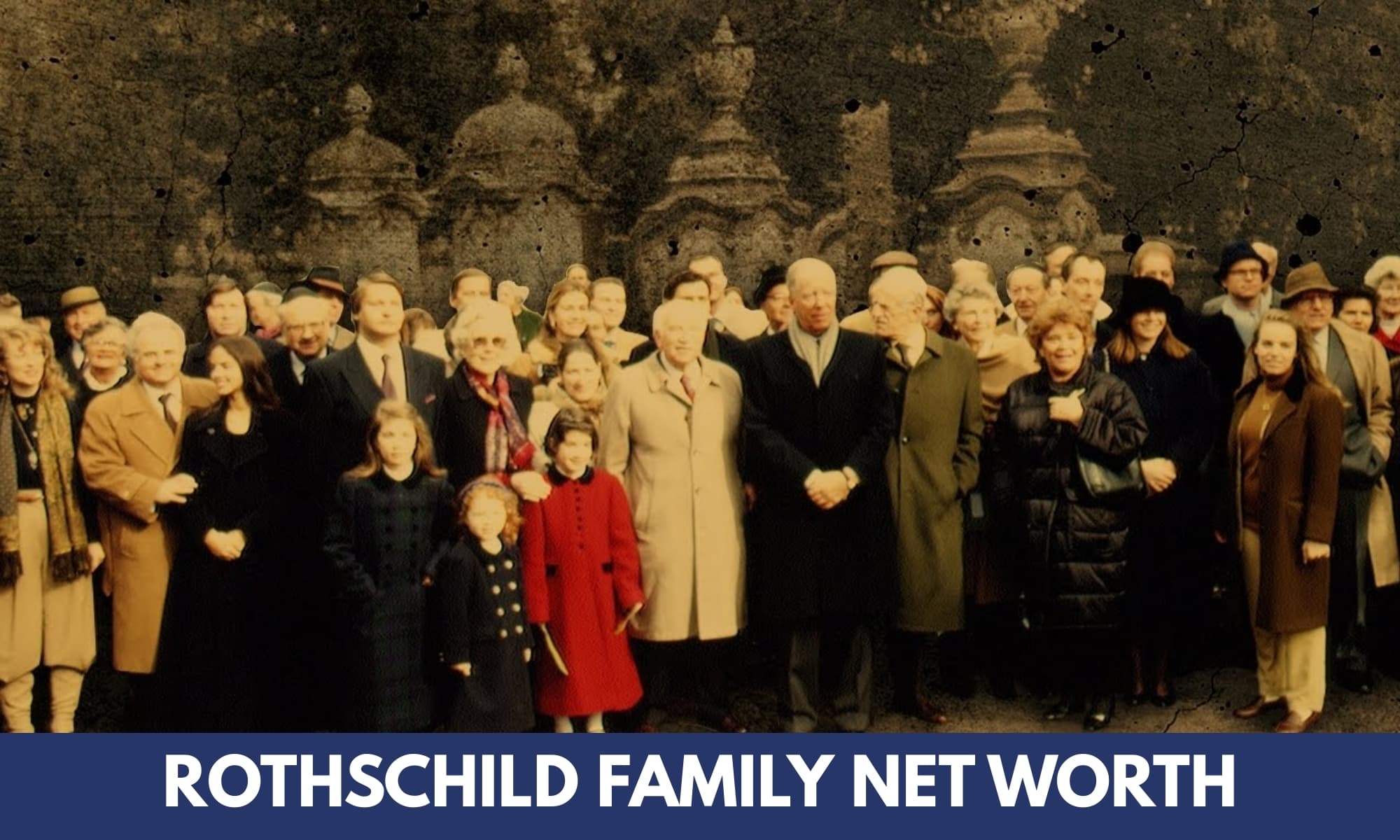
The Rothschild family net worth has been one of the most debated financial topics in modern history.
For more than two centuries, the Rothschild dynasty has been associated with immense wealth, global banking power, and powerful connections across Europe.
Founded in the 18th century by Mayer Amschel Rothschild, the family built a multinational banking empire that financed governments, supported major infrastructure projects, and influenced international finance during critical historical moments.
Today, many online claims suggest the Rothschild family is worth trillions of dollars. However, separating myth from verified financial data is essential.
While the family remains wealthy and influential, their fortune is spread across multiple branches and private investments worldwide.
In this article, we will explore the realistic estimates of the Rothschild family’s wealth in 2026, examine how they built their empire, and debunk the most common conspiracy theories surrounding their net worth.
Quick Bio Table
| Attribute | Details |
| Full Name | Rothschild Family |
| Founder | Mayer Amschel Rothschild |
| Founded | 18th Century (1744) |
| Origin | Frankfurt, Germany |
| Industry | Banking, Finance, Investments, Real Estate, Vineyards |
| Notable Companies | Rothschild & Co, N M Rothschild & Sons |
| Estimated Net Worth (2026) | $350–400 Billion (combined branches) |
| Global Presence | Europe (UK, France, Austria, Switzerland) & Worldwide Investments |
| Known For | Banking empire, investment networks, vineyards, philanthropy |
| Number of Descendants | Over 200 living members |
Who Founded the Rothschild Family Fortune?
The foundation of the Rothschild family fortune was laid by Mayer Amschel Rothschild in the mid-18th century. Born in 1744 in Frankfurt’s Judengasse (Jewish quarter), Mayer began his career as a coin dealer and financial agent. His deep understanding of rare coins and international trade helped him build strong relationships with wealthy European elites.
His big breakthrough came when he became a financial advisor to German nobility, particularly the Landgrave of Hesse. By managing royal finances and handling large-scale transactions, Mayer established trust and expanded his capital base.
What truly transformed the family into a banking dynasty was his strategic vision. Instead of keeping the business local, he sent his five sons to major European cities London, Paris, Vienna, Naples, and Frankfurt. This created one of the first multinational banking networks in history, allowing the Rothschilds to move money, finance governments, and dominate European finance during the 19th century.
How the Rothschilds Built Their Wealth (Historical Breakdown)
The Rothschild family’s rise to immense wealth was not accidental it was the result of strategic financial decisions and bold investments across Europe. Their empire was built on multiple pillars that solidified their position as one of history’s most influential banking dynasties.
1. Government Bond Financing
The Rothschilds became famous for financing governments during wars, most notably the Napoleonic Wars. By providing loans to European monarchs, they earned not only interest but also significant political influence. Their network across five major cities allowed them to transfer funds faster and more securely than any rival, giving them an unparalleled advantage.
2. Banking Dominance in 19th Century Europe
Through their family banks, they managed sovereign debt, handled royal accounts, and offered private banking services to Europe’s elite. Their reputation for discretion and reliability made them the preferred bankers for the continent’s aristocracy.
3. Gold and Precious Metals Trading
The Rothschilds played a major role in London’s gold market. By controlling the flow of gold and precious metals, they stabilized their wealth and influenced currency markets.
4. Railways, Mining, and Infrastructure
Investments in European railroads, mining ventures, and infrastructure projects multiplied their wealth while strengthening Europe’s industrial expansion.
These strategies created a foundation that has allowed the Rothschild family to maintain substantial wealth for over two centuries, despite global economic changes and generational divisions.
Rothschild Family Net Worth in 2026 (Estimated)
Estimating the exact net worth of the Rothschild family today is challenging. Unlike publicly traded companies, the family’s wealth is spread across private holdings, trusts, and multiple generations, making precise figures difficult to verify.
Combined Known Wealth
Financial analysts and historians estimate that the Rothschild family’s fortune is in the billions rather than trillions. Their wealth is divided among numerous descendants across Europe and beyond, with each branch managing its own investments, estates, and private banks.
Why Exact Figures Are Unknown
- The family does not publicly disclose financial statements.
- Assets are held in private trusts and family-owned corporations.
- Wealth is diversified across banking, real estate, vineyards, and other investments.
Presence on Forbes Lists
While some individual Rothschild family members appear on Forbes’ billionaire lists, the family as a single entity does not appear, highlighting that their wealth is fragmented rather than centralized.
In short, the Rothschilds remain extremely wealthy, but claims of “trillion-dollar fortunes” are exaggerated myths fueled by conspiracy theories.
The Modern Rothschild Business Empire
Today, the Rothschild family continues to maintain a powerful presence in global finance through several key entities and investments.
1. Rothschild & Co
Based in Paris, Rothschild & Co specializes in investment banking, wealth management, and advisory services. The firm advises governments, corporations, and ultra-high-net-worth individuals on mergers, acquisitions, and strategic investments.
2. N M Rothschild & Sons
The London branch of the family bank focuses on financial advisory, asset management, and private equity. It continues the legacy of discreet, personalized banking that made the Rothschilds famous in the 19th century.
3. Real Estate & Luxury Assets
The Rothschilds own numerous estates, vineyards, and art collections across Europe. Their vineyards in France, such as Château Lafite and Château Mouton Rothschild, are world-renowned for premium wine production.
4. Diversified Investments
The family also invests in energy, infrastructure, private equity, and global financial markets, maintaining a balance between traditional banking and modern investment strategies.
This modern empire reflects a careful blend of historic banking practices and contemporary wealth management, allowing the Rothschilds to retain influence and financial power while keeping much of their holdings private.
Are the Rothschilds Worth Trillions?
The idea that the Rothschild family is worth trillions of dollars is one of the most persistent myths surrounding their wealth. While they are undeniably wealthy, historical records and financial analyses suggest that these claims are grossly exaggerated.
Origin of the Trillion-Dollar Myth
Many of these claims stem from conspiracy theories and misinterpretations of the family’s historical influence. Because the Rothschilds financed governments, controlled major banking networks, and amassed significant assets over centuries, some online sources mistakenly inflated their total wealth into the trillions.
Reality Check
- The family’s fortune is spread across hundreds of descendants, rather than held by a single entity.
- Verified estimates place their combined net worth in the billions, not trillions.
- The Rothschilds’ influence in finance does not equate to controlling all global money.
Why Myths Persist
The combination of secrecy, historical prominence, and media fascination has fueled exaggerations. By separating myth from fact, we can better understand the Rothschilds’ real financial legacy: a multi-generational billionaire family with a rich history in banking and investments, but far from the trillion-dollar empire often imagined online.
Modern Conspiracy Theories Explained
The Rothschild family has long been at the center of conspiracy theories, often portrayed as shadowy figures controlling global finance and politics. While these stories are widespread online, they are largely myths with little basis in verified evidence.
Common Conspiracy Claims
- The Rothschilds control all central banks.
- They secretly run world governments or international organizations.
- Their wealth is hidden and extends into trillions of dollars.
Separating Fact from Fiction
- Influence vs Ownership: The family has historically held significant banking power, but this does not mean they control all global finance.
- Generational Division: Wealth is split among hundreds of family members, making centralized control impossible.
- Historical Context: Many myths exaggerate 19th-century financial successes to modern-day dominance.
By understanding the difference between documented history and sensationalized claims, it becomes clear that the Rothschilds’ true power lies in their legacy, investments, and strategic financial acumen, not in secretive global domination.
Rothschild Family vs Other Richest Families
While the Rothschilds remain one of the wealthiest families in history, their fortune is often compared to other modern billionaires and family dynasties to provide perspective.
| Family / Group | Estimated Net Worth | Primary Source of Wealth | Notes |
| Rothschild Family | $350–400 billion (combined branches) | Banking, investments, real estate, vineyards | Wealth spread across multiple descendants; private holdings |
| Walton Family (Walmart) | $250–270 billion | Retail | Largest portion tied to Walmart shares; centralized family wealth |
| Ambani Family (Reliance Industries) | $100–110 billion | Oil, energy, telecom | Concentrated in India; largely public corporate holdings |
| Rockefeller Family | $11–12 billion | Banking, oil (historical) | Wealth spread over generations; mostly philanthropic and investments today |
| Saudi Royal Family | $1.5–2 trillion (estimate) | Oil & government assets | Not fully transparent; includes royal family assets and state wealth |
Key Takeaways
- The Rothschilds’ wealth is historically significant and diversified, but not the largest in modern terms.
- Unlike families like the Waltons or Ambanis, Rothschild wealth is more fragmented, making it harder to quantify.
- Comparisons highlight the difference between historical banking influence and current concentrated corporate fortunes.
How Many Rothschilds Are Alive Today?
The Rothschild family has grown into a sprawling dynasty, with hundreds of descendants spread across Europe and beyond. While it’s difficult to pinpoint the exact number of living family members, estimates suggest there are more than 200 Rothschilds actively involved in various aspects of the family business or managing private holdings.
Family Branches
The family is traditionally divided into major branches based on Mayer Amschel Rothschild’s five sons:
- London Branch – Focused on N M Rothschild & Sons and international finance.
- Paris Branch – Runs Rothschild & Co and investment management.
- Vienna Branch – Primarily involved in European investments and philanthropy.
- Naples Branch – Historical influence, now largely dormant.
- Frankfurt Branch – Original family base, mostly estate management and private ventures.
Modern Involvement
Many descendants remain active in banking, finance, vineyards, philanthropy, and cultural enterprises. Others lead private lives, contributing to the family’s low public profile.
Despite the myths, the Rothschilds today are a large but private family, with wealth and influence distributed across generations rather than concentrated in a single individual.
Where Is the Rothschild Wealth Today?
The Rothschild family’s wealth today is diversified across multiple sectors and continents, reflecting both their historic banking roots and modern investment strategies.
1. Banking and Financial Services
The core of their fortune remains in private banking and investment management, through entities like:
- Rothschild & Co
- N M Rothschild & Sons
These firms handle mergers and acquisitions, asset management, and advisory services for high-net-worth clients and corporations worldwide.
2. Real Estate and Estates
The family owns numerous historic estates, castles, and private residences across Europe, including properties in England, France, and Switzerland.
3. Vineyards and Luxury Assets
Their holdings include some of the most prestigious vineyards in France, such as Château Lafite Rothschild and Château Mouton Rothschild, which produce world-renowned wines.
4. Diversified Investments
The Rothschilds invest in:
- Energy and natural resources
- Infrastructure projects
- Private equity and global financial markets
- Philanthropic and cultural initiatives
Key Insight
By maintaining a diverse portfolio and keeping much of their wealth private, the Rothschilds have preserved their fortune across generations while staying influential in global finance without public scrutiny.
Philanthropy and Cultural Influence
Beyond banking and investments, the Rothschild family has made a lasting impact through philanthropy, arts, and cultural initiatives. Their contributions demonstrate a commitment to social, educational, and environmental causes.
1. Charitable Donations
The family supports numerous charities across Europe, funding:
- Education and scholarships
- Medical research
- Social welfare programs
2. Arts and Museums
The Rothschilds have historically collected art, rare books, and historical artifacts, many of which are now displayed in museums or loaned for public exhibitions.
3. Environmental and Cultural Projects
They invest in:
- Conservation of historic estates and gardens
- Sustainable vineyard practices
- Cultural preservation initiatives
4. Academic and Scientific Funding
The family has a tradition of supporting universities and research institutions, contributing to innovation and knowledge development.
Through these efforts, the Rothschilds have maintained a legacy beyond finance, showing that their influence extends into philanthropy, culture, and education further shaping their public image while keeping their family affairs largely private.
Frequently Asked Questions
What is the Rothschild family net worth in 2026?
The Rothschild family’s combined net worth is estimated in the billions, not trillions, with wealth spread across multiple branches and private holdings.
Are the Rothschilds the richest family in the world?
While historically very wealthy, they are not the richest family today. Families like the Waltons and Ambanis have more concentrated modern fortunes.
Do the Rothschilds own central banks?
No. The family has influence in banking, but they do not control all central banks, contrary to common conspiracy theories.
How did the Rothschild family become powerful?
Their power originated from Mayer Amschel Rothschild’s banking ventures in 18th-century Frankfurt, combined with the strategy of placing his five sons in major European cities to create a multinational banking network.
Are the Rothschilds worth trillions?
No. Claims of trillion-dollar wealth are exaggerated myths. Verified estimates place their wealth in the billions, distributed among descendants.
How many Rothschilds are alive today?
There are over 200 descendants worldwide, many active in banking, investments, vineyards, and philanthropic work.
Conclusion
The Rothschild family remains one of history’s most famous banking dynasties, with a legacy spanning over two centuries.
While myths often inflate their fortune to trillions of dollars, verified estimates place their wealth in the billions, distributed among hundreds of descendants and multiple branches.
From Mayer Amschel Rothschild’s origins in Frankfurt to the modern operations of Rothschild & Co and N M Rothschild & Sons, the family built an empire through banking, investments, real estate, and luxury assets.
Their influence extends beyond finance into philanthropy, culture, and the arts, reflecting a legacy that is both financial and societal.By separating fact from fiction, it’s clear that the Rothschilds’ wealth is impressive, but not mythical.
Their story is one of strategic vision, generational wealth management, and lasting global impact making them a symbol of historical financial power rather than secretive trillionaires.